
Two Years of BioE3: India's Bet on the Biology Century, and What Comes Next
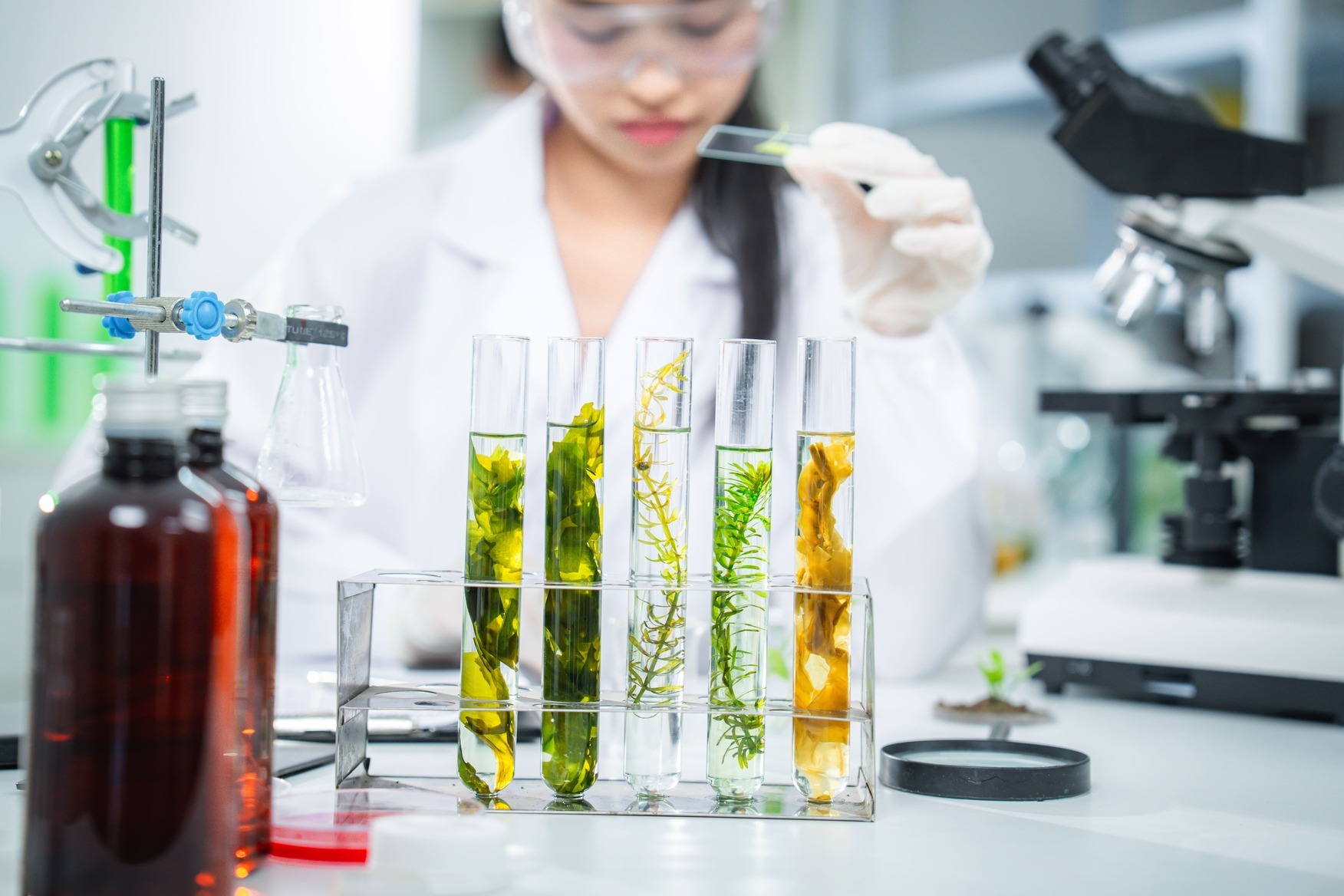
For two decades, the bioeconomy was a promise about the future. Engineered microbes would brew our chemicals, ferment our proteins, and grow our materials. Biology would become a manufacturing platform as flexible as silicon.
For a growing list of commercially relevant products, that promise is now real, and the hard part has moved. Biology still fails often; yields, strain engineering and downstream processing remain genuinely difficult. But for an expanding set of products, the primary question is no longer whether biology works. It is whether a country can make the product at a competitive cost, at a reliable scale, with enough committed demand to justify the plant. The most credible recent work, from the OECD and the World Economic Forum to BCG and the US National Security Commission on Emerging Biotechnology, converges on that shift.
The world has largely answered “can we?” The question now is “can we make it cheap enough, at scale, with buyers already waiting?”
That change decides who leads. When the science was the hard part, the best laboratories led. When execution is the hard part, the advantage moves to whoever builds the factories, signs the offtake, and finances the step from pilot to plant. Two years ago, India read that shift and built a policy around it, called BioE3. This blog looks at what the shift means, where India sits, what BioE3 has changed in two years, and what still has to happen next.
Why Manufacturing Economics Now Matter More Than Discovery
Cost is where the constraint bites. BCG's analysis is the clearest on this. Outside pharmaceuticals, where high margins forgive high costs, biomanufacturing has stayed in niche markets because it runs at a premium to incumbents, roughly 30 to 50% more for specialty chemicals and two to three times more for many foods. Scale closes that gap, not cleverer biology. Purpose-built, standardised plants can cut unit costs by about half on existing strains, and by up to 90% as strains and facilities improve together. That is the point where biology meets petrochemical and animal-derived incumbents on price, and where BCG sees a $200 billion market opening by 2040.
The bioeconomy does not behave like software, where costs fall toward zero. It behaves like infrastructure, closer to the early years of solar and wind. Bioethanol reached near-parity with fossil fuels within a decade and built a $100 billion market, helped by mandates and guaranteed offtake. Precision fermentation sits at a similar point now, waiting for standardised plants, committed buyers and patient capital. What limits the market is not appetite. It is bricks, steel, feedstock, and a buyer willing to commit before the plant is built.
Two conclusions follow. Cost of goods is set upstream of the microbe, by the feedstock and the plant, which makes feedstock a strategic choice rather than a technical one. And a plant this expensive gets financed only when demand is visible in advance, which makes committed offtake the real unlock. One test captures both: can a country build the supply, and can it build the demand? It is the right lens for reading BioE3
How the major economies are positioning
The useful observation about the US, Europe and China is not their individual scoreboards. It is that all three have arrived at the same conclusion at once: the frontier has moved from biological innovation to industrialisation.
China has been most explicit. Its 15th Five-Year Plan, approved in March 2026, names biomanufacturing, not the broader “bioeconomy,” as a core technology for self-reliance, and points fermentation at national priorities such as protein for food security and bio-based chemicals to cut oil imports. It is a manufacturing-first strategy, stated plainly, and it follows two decades in which China's share of global biotech patents rose from 1% to 28%.
The United States has reached the same view from the opposite direction. Its National Security Commission on Emerging Biotechnology paired a call for fresh investment with a candid admission: America excels at early-stage innovation, and its unfinished task is to commercialise and scale what it invents. Europe, which leads the world in life-science publications, says much the same in its 2025 bioeconomy strategy, which is built to turn research depth into commercial products.
So the competitive question has become common to everyone: who can cross from a molecule that works in the lab to a product that sells at scale, the step often called the valley of death. That crossing happens to sit where India is unusually strong.
Why India's Position is Stronger Than it Looks
The easy read places India fourth, behind the US, Europe and China. India's bioeconomy grew from about $10 billion in 2014 to $195.3 billion in 2025, expanding around 18% in the past year and now near 5% of GDP, with its rank on the global bioeconomy index rising from 14th in 2022 to 12th in 2026. Impressive, and still smaller in absolute terms than the incumbents.
That read measures the wrong thing. If leadership now turns on manufacturing and cost rather than papers and patents, the question is not who has the largest research base. It is who can build and run biomanufacturing at a competitive cost. On that question, India's ranking looks different.
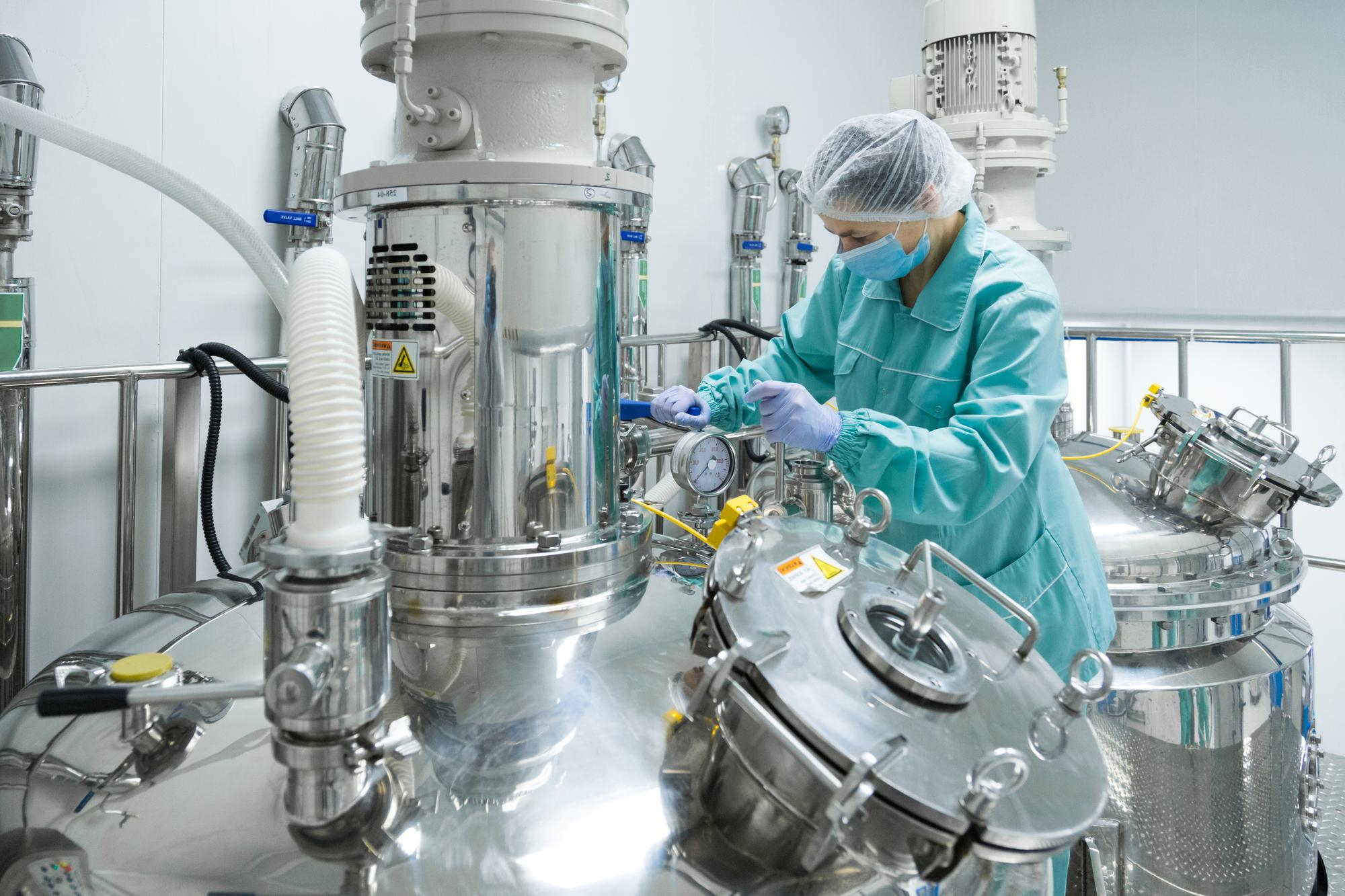
India's strengths are the ones this moment rewards: deep process-engineering and manufacturing talent, the base that made it the world's largest vaccine producer and a global hub for generics and biosimilars. Also, cost discipline in its industrial culture and a track record of making complex biological products to global standards at a competitive price.
The skill the world is now chasing, turning invention into product at scale, is one India has spent decades building. A demand-side tailwind helps: as global buyers look for a biologics base beyond China, and as an E20 ethanol mandate and rising demand for sustainable farm inputs pull real volume at home, India has genuine domestic demand today while the export opportunity matures. What it needed was a strategy that treated biomanufacturing, not biological research, as the thing to build. Two years ago, it wrote one.
What BioE3 has Changed in Two Years
BioE3, approved in August 2024, stands for Biotechnology for Economy, Environment and Employment, and its full title is a policy for high-performance biomanufacturing. Not bioscience. Biomanufacturing. Most national strategies fund discovery and hope manufacturing follows. BioE3 aims at scale-up directly, which is its central insight.
Two years on, it has a record. By April 2026 the government reported eleven calls for proposals across six thematic sectors, more than 500 proposals received, and six operational biofoundries with 21 shared bio-enabler facilities under a new National Biofoundry Network
These are physical, shared facilities with design-build-test-learn platforms and pilot capacity, run on a public-private model so a startup can reach scale without raising the 40 to 80 crore rupees a synthetic-biology wet lab would otherwise cost. A 2025 partnership with MeitY pairs biological datasets with national compute. The startup base has passed 9,100, up from about 1,000 a decade ago, and hubs are being placed in tier-II and tier-III cities on local biomass, with 10% of the biomanufacturing budget reserved for the North-East.
The deeper change is institutional. DBT is becoming an industrial-policy actor rather than a grants-focused research ministry. The OECD notes that most of the fifty-plus countries with bioeconomy strategies still lean on public research grants and underuse the tools that draw in private capital. BioE3 leans toward those tools. On the supply side, two years in, it is no longer a promise but something under construction.
The Missing Piece is Demand
BioE3 builds the capacity to make bio-based products. It says less, so far, about who buys the first commercial batch, and in new categories where the market is still forming, that is what most determines whether first-of-a-kind plants get built. The clean-energy lesson is that capital-intensive infrastructure gets financed when demand is visible before supply, usually through contracted offtake. Supply and demand work best when they move together.
A useful reference point already exists. Europe's 2025 strategy pairs scale-up funding with explicit demand creation: an alliance targeting 10 billion euros of collective offtake by 2030, lead markets built through public procurement, and an investment group that brings public banks and private investors together to de-risk first-of-a-kind plants. India can adapt rather than invent this, and can move quickly, because its home market already generates real pull.
Five steps would carry BioE3 from a strong supply-side policy toward a more complete one.
None of these is a moonshot. Each is a known instrument, several already proven abroad. The supply side is being built; the task is to fund the demand with equal seriousness.
One Example of What the Industry Can Look Like
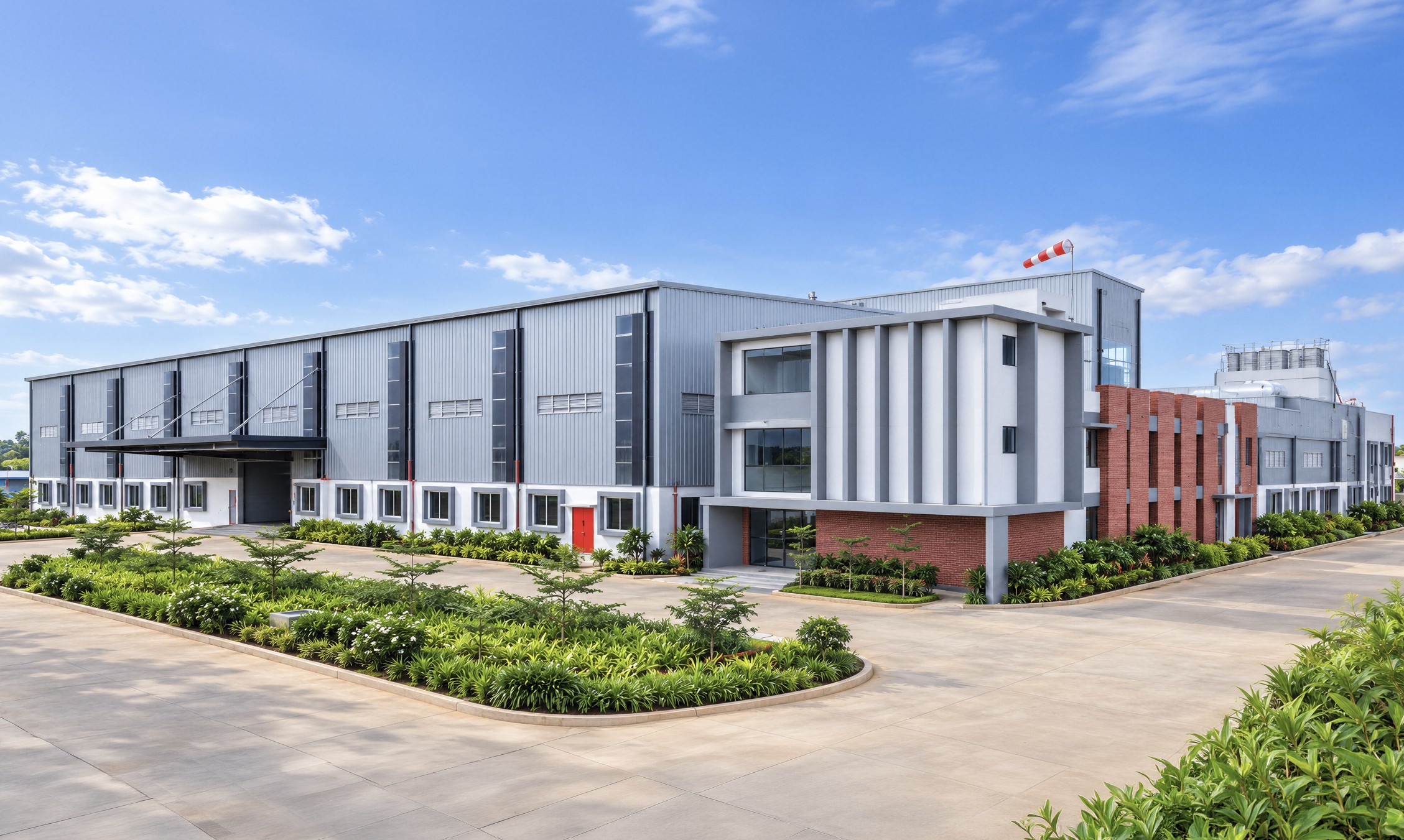
It is worth grounding the argument in a working case. String Bio, is one Indian company that has made the lab-to-plant transition, and its choices illustrate the economics described above rather than settle them.
The platform converts methane, including waste methane from biogas, into products across agriculture, animal nutrition, human nutrition and industry, at a commercial facility the company owns and operates. Two choices are particularly relevant to the manufacturing thesis. The first is feedstock: using methane rather than conventional sugar-based feedstocks can create a different cost and resource equation while linking production to an abundant industrial and waste-stream resource. The second is the platform model: one core technology serving multiple markets, allowing new products to build on infrastructure, process knowledge and capabilities already in place.
The commercial evidence is what matters. CleanRise, a methanotroph-based biostimulant for rice, has been validated in farmer field trials and by ICAR's national rice programme across several agro-ecological zones, with reported reductions in methane and nitrous oxide, yield gains, and lower nitrogen use; PRO-DG holds FDA GRAS status in the United States in crustacean feed. These are products entering markets that already exist, addressing one of the central challenges of biomanufacturing: building demand alongside supply.
The broader point is not that one company settles the national question. It is that, the thesis is no longer purely theoretical: world-class deep-tech biomanufacturing can be built from India, combining process and cost discipline with frontier science, and there is already a company putting that model into practice.
The Next Five Years
The serious analyses agree on the essentials. The molecules increasingly work, and the forecasts, tens of trillions of dollars by mid-century, are large and broadly shared. What is open is who will build the factories, sign the offtake, and design the financing fast enough to turn proven biology into industry. That is likely to be settled wherever biomanufacturing is treated as strategic infrastructure, demand is built alongside supply, and the path from lab to plant is shortest.
On those measures, India is better placed than its league-table rank suggests, and BioE3 is a well-timed bet that it can turn that advantage into installed capacity. Two years in, the supply side is taking real shape. The harder and more decisive work is the demand side and the capital to match it. If India funds that with the same conviction it has brought to the infrastructure, the question shifts from whether it can scale the bioeconomy to whether it can shape it. The early evidence, in policy and in the first companies operating at commercial scale, suggests the question is worth taking seriously.
References
1. China's 15th Five-Year Plan and its focus on biomanufacturing for self-reliance: Rhodium Group, "China's Next-Generation Industrial Policy" (2026), rhg.com; and World Economic Forum, "What China's new 5-Year Plan means for global trade and investment" (March 2026), weforum.org. Patent-share figures compiled across bioeconomy analyses, 2025-2026.
2. US National Security Commission on Emerging Biotechnology, Final Report and Action Plan to Congress (April 2025) and subsequent assessments, biotech.senate.gov/final-report.
3. European Commission, EU Bioeconomy Strategy 2025, and analysis of its demand-side measures (Bio-based Europe Alliance, lead markets, Bioeconomy Investment Deployment Group): Crowell & Moring (Dec 2025), crowell.com; A&O Shearman / Lexology briefings (Jan 2026).
4. Boston Consulting Group, analysis of the cost barrier in biomanufacturing (scaled biofoundries, up to 90% cost reduction, $200 billion market by 2040), as summarised across bioeconomy syntheses, 2024-2026.
5. India Bioeconomy Report (IBER) 2026, BIRAC / ABLE, released 19 March 2026: bioeconomy at $195.3 billion in 2025, about 18% growth, near 5% of GDP. Reported via IBEF, ibef.org, and Ministry of Science & Technology, PIB (March 2026).
6. Union Minister Dr Jitendra Singh, reply to the Rajya Sabha, 2 April 2026: six operational biofoundries and 21 bio-enabler facilities under the National Biofoundry Network; bioeconomy $195.3 billion (2025) up from $137 billion (2022); global bioeconomy index rank 14th (2022) to 12th (2026); eleven calls for proposals. Reported in Organiser (April 2026) and Anantam IAS (April 2026).
7. Department of Biotechnology, BioE3 Biomanufacturing Initiative, bmi.dbt.gov.in (500+ proposals; National Biofoundry Network); and A. Gupta et al., "Bioeconomy in India: Policy, Prospects and Perspective," Engineering Biology, Wiley (2026).
8. IMPRI Policy Update, "BioE3 Policy: Biotechnology for Economy, Environment and Employment" (July 2026), impriindia.com: recommendations on RDI Fund tranche-allocation to scale-up, single-window regulatory practice, a National Bioeconomy Mission, and a public BioE3 dashboard.
9. Anantam IAS, "BioE3 Policy and National Biofoundry Network 2026" (April 2026), anantamias.com: recommendation for a SEBI/DPIIT biotech-specific startup and listing category; OECD findings on bioeconomy financing instruments.
10. String Bio product references (SIMP platform, CleanRise, PRO-DG): String Bio published materials; ICAR AICRP on Rice multi-location validation; and Kumar et al., Frontiers in Plant Science (2024), open-field trial results for the methanotroph-based rice biostimulant.